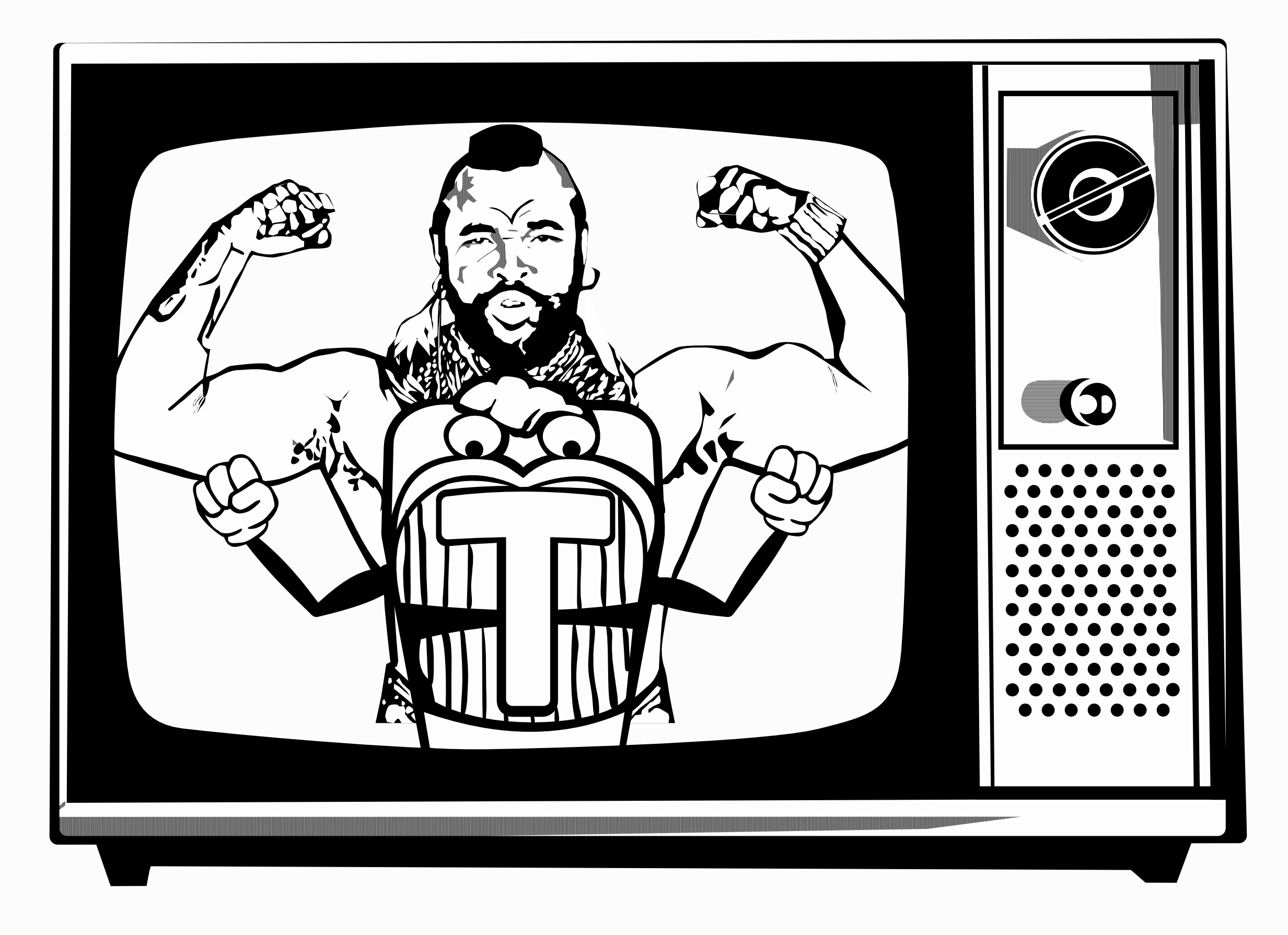
A "Wild Pack" and the Metaphor
I find myself in a dilemma. Neil Postman’s Amusing Ourselves to Death is about the decline of the printed word and the rise of television as our dominant cultural medium. Because of this, I catch myself speaking of TV in both the past and present tense.
It’s obvious that television isn’t the juggernaut it once was. Yet, the "old timers" still in power spent their formative years in its glow. As did I. Even if we are now obsessed with AI and the unintended consequences of the internet, it’s worth looking back at the screen that gave life to all other screens.
Raised by a Wild Pack
Forgive me for repeating myself, "I was raised by a wild pack of televisions." It’s my favorite one-liner. I’ve never asked my parents how they feel about me using that as my Facebook bio, but it reflects a truth. When my folks were away, the TV was on. When they got home, it stayed on. Maybe the wild pack was raising all of us.
Television was the constant; reading was a source of anxiety and "brain fatigue." Once I got my driver's license, my favorite school hack was driving to the county library—not for books, but to dig through their amazing video selection. Whenever I had to do a book report, I’d hunt for titles that had been adapted into movies, praying the film hadn’t strayed too far from the text.
In college, a housemate once asked if I watched four hours of TV a day. I could hear the self-righteous indignation in his voice; he thought four hours was egregious. Surprise, you little bugger. It was more like six on light days. I guess everyone wasn't raised by a wild pack of televisions like I was. (Though, it does make me a ringer at bar trivia.)
The Sesame Street Paradox
My daily television regimen was fortified with a healthy dose of PBS: Mr. Rogers, Sesame Street, The Electric Company, The Letter People. I’m nostalgic for them because my early school years were traumatizing. I struggled to read, I was bullied, I lacked coordination, and I couldn't regulate my emotions. I was labeled "hyperactive" and prescribed tranquilizers; if ADHD was "a thing" in the 70s, no one in my corner of South Carolina knew about it.
Television was my escape. And while I didn't watch PBS for the "educational value," I can rightfully say that I learned all kinds of things. The Letter People taught me phonics. Schoolhouse Rock songs will stay with me as long as I have cognitive brain function—but that’s apparently irrelevant to Postman’s point.
While great animation and catchy tunes taught me how to use adverbs and how laws are created in Washington, Schoolhouse Rock didn’t necessarily teach me to love school—it taught me that education ought to be entertaining. Postman argues that TV makes the classroom seem boring. It forces educators to become "entertainers" just to make learning tolerable for kids raised on a screen.
The Medium is the Metaphor
Postman’s strongest example is evaluating Sesame Street as a curriculum. "The Street" has no continuity; today’s lesson doesn’t depend on what was taught yesterday. There is no measured progress, no required effort, no homework. It is a passive, abbreviated experience that can’t match the depth of book learning.
This critique feels true but also strange to me. As a "recovering evangelical," I’m used to people judging pop culture for its worldly or "satanic" influences. But Postman isn't being a moralist. He actually appreciates TV as a source of "junk." He thinks television is less dangerous when it only produces junk; he’s criticizing television for attempting to be something more.
The danger begins when we insist that an entertainment and advertising device be "informative." By giving the screen the same prestige as the written word, we changed how our culture thinks and communicates with each other. We shifted from the deep logic of typography to the quick, abbreviated, flashing images of the screen. We created our entire ecology to fit the medium.
Whereas one generation was once willing—might I say excited—about sitting through a six-hour Lincoln-Douglas debate, today we are lucky if our political candidates agree to debate at all. (More on that later.)
Whether we see the world through a page or a lens, our "media-metaphors" classify the world for us. They frame it, enlarge it, and color it. They don't just tell us what to think; they tell us how to see. AOSTD 10
The Educator vs. The Entertainer Neil Postman was an educator who spent years honing his opinions. I’m comfortable with the idea that television has created a new ecology of discourse, but at times, his view feels rigid—as if teachers shouldn’t be allowed to be innovative or bring their artistic gifts into the classroom.
Early in the book, Postman makes a big deal about Dr. Ruth Westheimer having a nightclub act, and Billy Graham trading zingers with George Burns during a television special. Does being funny really reduce their credibility?
Dr. Ruth was being criticized for being entertaining in a place made for entertainment. I should also add Dr. Ruth was as sex therapist and not an academic professor, and I imagine seeing someone of her stature talking frankly about sex as recreation was "shock value" funny, but I don't perceive her backstage working on a "tight ten" standup routine before taking questions from the audience.
Even when discussing the Lincoln-Douglas debates, Postman admits that sarcasm, insults, and satire were sprinkled throughout the marathon sessions. So, is Billy Graham yucking it up with George Burns really an indication of how far society has devolved? Maybe, maybe not.
But what do I know? I am not an educator by trade, and it’s been a long time since I’ve been a student. Having been raised by a wild pack of televisions, perhaps I’m just revealing my bias.